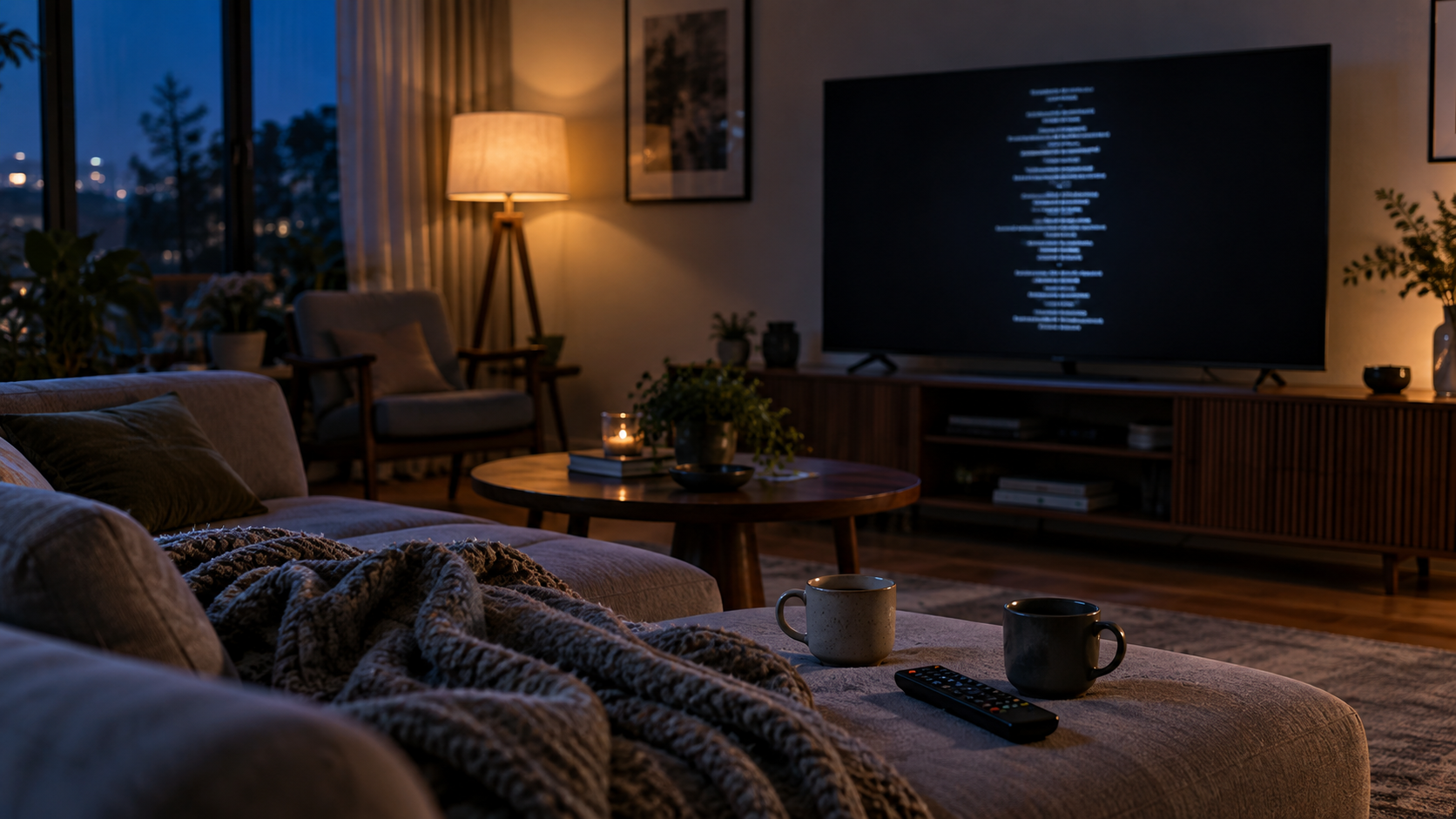
“Would we use this?”
“Probably.”
“For what?”
That final question does a surprising amount of work.
A person clicking an entertainment advertisement may be interested in one title. A shared subscription may need to fit other people and other evenings as well.
I don't mean every household holds a formal procurement meeting. Most of us have more casual arrangements involving a remote control, a half-finished dinner and somebody saying they are happy with anything before rejecting the first three suggestions.
But a campaign can recognise that an individual click starts a decision with a wider context.
The service might be used together or separately. The available material might interest one person strongly and another only occasionally. The relevant plan conditions might determine whether the arrangement actually fits.
I would show those conditions plainly and give people a useful way to explore what is there. A couple of relevant examples can help more than a sweeping promise of “something for everyone.”
That phrase asks a lot of a catalogue.
Be careful with assumptions about who chooses. Age, household roles and broad audience categories do not tell us the whole story. Asking how people actually use the service is more informative than assigning the remote to a fictional ideal customer.
The page can support several sensible questions: what can we watch, how does the plan work, and is the arrangement suitable for the way we'd use it?
The advertisement doesn't need to answer them all. It can help the person begin without suggesting an answer the service cannot support.
For a review, I would ask someone to explain the offer to a second person after reading the page. What would they mention? What would they still need to check? Where does the explanation become “I'm not quite sure”?
That little exercise often reveals gaps you miss when everybody reviewing the page already knows the plan.
It is also pleasantly ordinary. No dramatic consumer model required.
A subscription can fit a household in several ways. Let the campaign make the arrangement understandable enough for that household to decide.
Then let them argue about what to watch. We are unlikely to solve that one, however damn clear the page becomes.

A thought worth keeping?